Showing posts with label United Kingdom. Show all posts

Tuesday, December 8, 2020

The University Has Come At Last...the University of Leeds and its Humble Beginnings

Leeds University Library Galleries and the University Archives are sharing the University’s history and achievements through a series of new exhibitions. A preview is now available for viewing, "The University Has Come At Last."

The University of Leeds is a public research university in Leeds, West Yorkshire, England. While the University was founded in 1904, it traces its origins to the founding of the Leeds School of Medicine in 1831 and then the Yorkshire College of Science in 1874. In 1884 the Yorkshire College of Science merged with the Leeds School of Medicine and was renamed Yorkshire College.

Three years later the two Leeds-based institutions joined forces with Owens College Manchester, and University College Liverpool, to become the federal Victoria University. After Manchester and Liverpool decided to establish universities, Leeds followed and in 1904, King Edward VII granted the University its own Charter as an independent institution.

Thursday, October 1, 2020

Egham Museum Posts Fascinating Twitter Thread

Check Twitter for a thread with additional embedded threads that was posted earlier today by Egham Museum from the UK. It provides a fascinating use of Twitter to communicate what life might have been for a student at Royal Holloway College for Women in 1887.

Enjoy...https://twitter.com/EghamMuseum/status/1311453097462575104.

Consider posting a comment below if you know of similar creative uses of social media to share information on institutional history.

Saturday, May 9, 2020

De Montfort University Celebrates 150th Anniversary


De Montfort University in Leicester, UK (DMU) is celebrating the 150th anniversary of its founding in 1870. The institution was initially known as the Leicester School of Art. Technical programs were added and by 1929 it was known as Leicester Colleges of Arts and Technology. The name changed to the City of Leicester Polytechnic after 1948 and De Montfort University after 1992.

A university press release posted May 8, 2020, "DMU's 150th anniversary exhibition moves online," provides details of an online exhibit where viewers can learn more about the institution's history.

Monday, November 26, 2018

University of Bristol Honors Pioneering Women

The University of Bristol recently unveiled a series of ten portraits celebrating notable Bristol women. The project hopes to redresses the traditional focus on the role of men and it is the first of many university initiatives to honor women. There will be new permanent artworks commissioned every year for a decade and in 2028 Bristol will celebrate the 100-year anniversary of full suffrage in Britain.  

You can read more in the B24/7 publication, "Bristol University Honours Its Pioneering Women in New Portraits."  The post includes a list of the women initially recognized:
  • Baroness Hale of Richmond, the first female president of the Supreme Court and former chancellor of the University of Bristol
  • Professor Jean Golding, leading epidemiologist and founder of the Children of the 90s study
  • Dr Gaositwe Chiepe, Botswana’s first female cabinet member and University of Bristol alumnus
  • Professor Dorothy Hodgkin, the first British woman to win a Nobel Prize and former chancellor of the university
  • Winifred Shapland, first female registrar of the University of Bristol and the first female registrar of any British university
  • Dr Elizabeth Casson, the first woman to receive a medical degree from the university and a pioneer for occupational therapy
  • Professor Helen Wodehouse, the first female chair at the university of Bristol
  • Norah Fry, champion for people with learning disabilities, whose donation led to the creation of the Norah Fry Research Centre
  • Enid Stacey, socialist and campaigner for women’s rights and alumnus of University College, Bristol (the precursor to the University of Bristol)
  • Mary Paley Marshall, the first woman lecturer at University College, Bristol
The University of Bristol received its royal charter in 1909 and is located in the city of Bristol in the United Kingdom. The university was the first higher education institution in the UK to admit men and women on an equal basis.

Wednesday, October 24, 2018

Bath College Celebrated 125th Anniversary of Founding

I'm a bit late on noting this anniversary...Bath College in Bath, UK celebrated the 125th anniversary of its founding in 1892 as Bath City Science, Art and Technical Schools.  Three predecessor schools provided a foundation for the  institution: 
  • Bath School of Art and Science, opened in May 1854 as the Bath School of Art
  • Bath Art Night Classes that was in existence by 1878
  • Bath Evening Science School that opened in 1879
Courses were offered through a number of different locations over the years prior to the relocation to Avon Street in 1960.  The name of the institution also changed over time with changes in student populations and mission.  In 1986 it became City of Bath College of Further Education. The name was changed again in 1989 to City of Bath College.  More recently, the college merged with Norton Radstock College to become Bath College.

Monday, September 17, 2018

Interdisciplinary Tension between Arts and Sciences at Mason College

The History of Education Society posted an interesting article by Clare Stainthorp, "student identities at birmingham's mason college."  Mason College was founded in 1875 and is considered as a predecessor for the University of Birmingham that received a Royal Charter in 1900. 
Stainthorp notes two proposed names, "Josiah Mason's Scientific College" or "Josiah Mason's College for the Study of Practical Science," implying that there would be a vocational focus at the institution.  However, Mason College admitted students of both genders with a variety of backgrounds and Stainthorp describes a healthy interdisciplinary tension playing out between the arts and various scientific disciplines.  She concludes with a recommendation that more consideration should be given to relationships between various disciplines in late-Victorian higher education.
Cadbury Research Library posted more than 100 historic photographs on flickr, "Roots of the University," that include fascinating images of Mason College in the late-1800s.

Thursday, May 31, 2018

A Forgotten Museum in Glasgow Linked to what is now the University of Strathclyde

I am creating this post using a Twitter thread from earlier today by @OssianLore.  The thread provides some interesting history for the progression of institutions that led to what is now the University of Strathclyde.  It also provided me with the opportunity to try out an app for rolling up a Twitter thread.

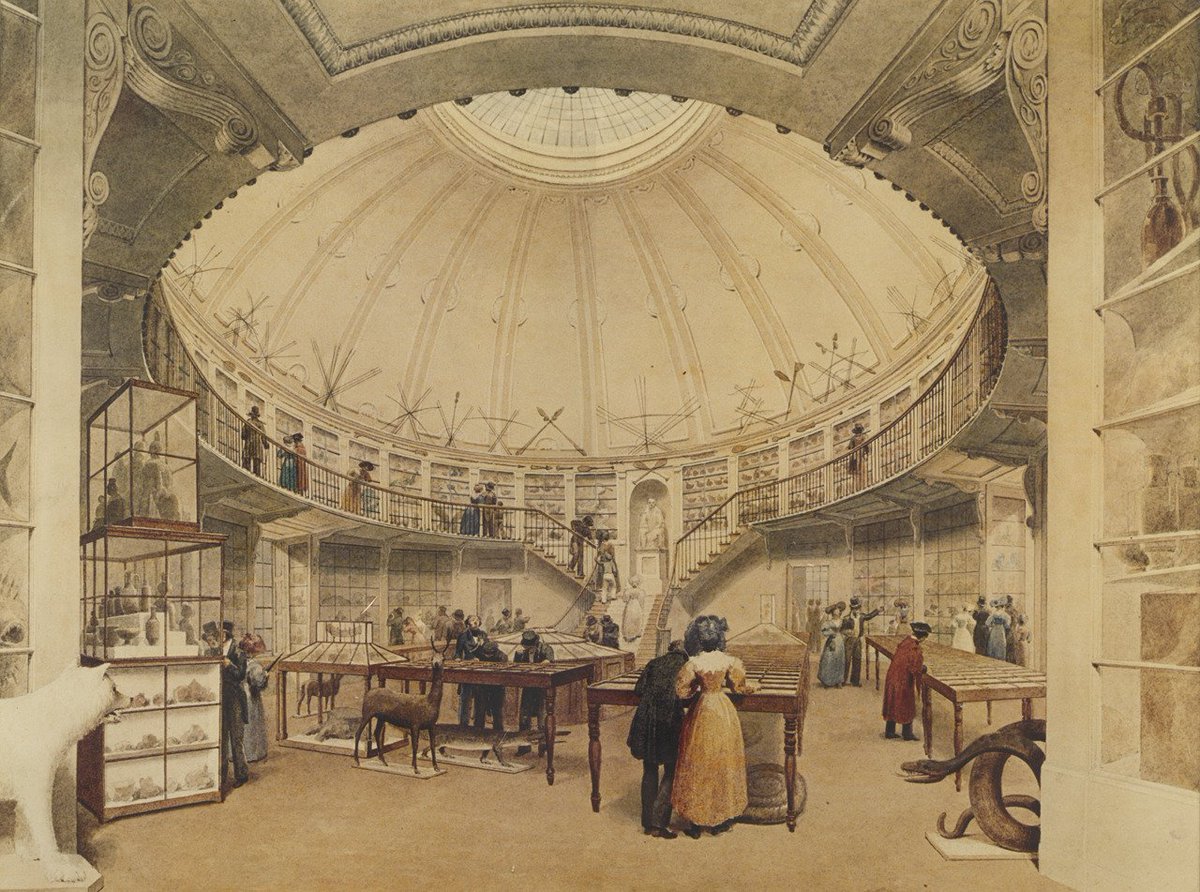
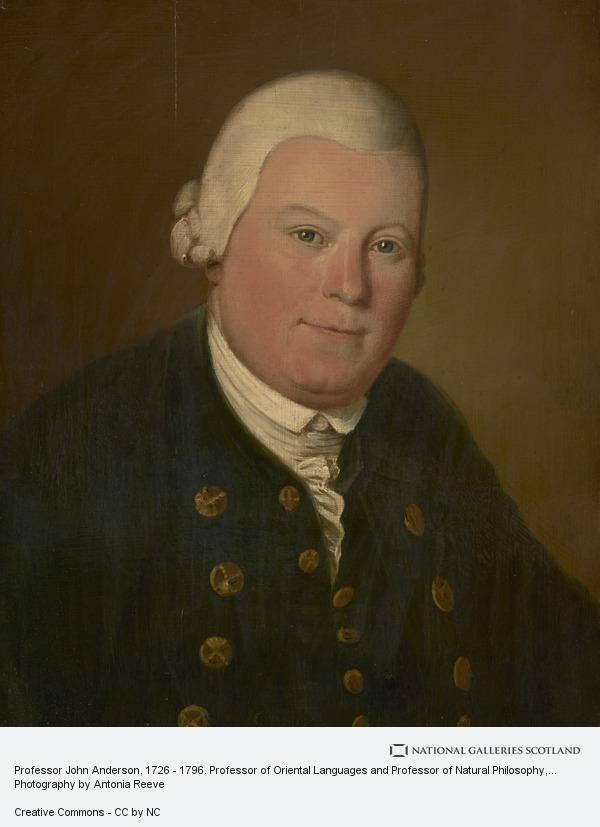
Glasgow's forgotten Andersonian Museum, George Street 1831. The museum was established in 1796 from the nucleus of the personal collection of John Anderson, Professor of Oriental Languages and of Natural Philosophy at the University of Glasgow.
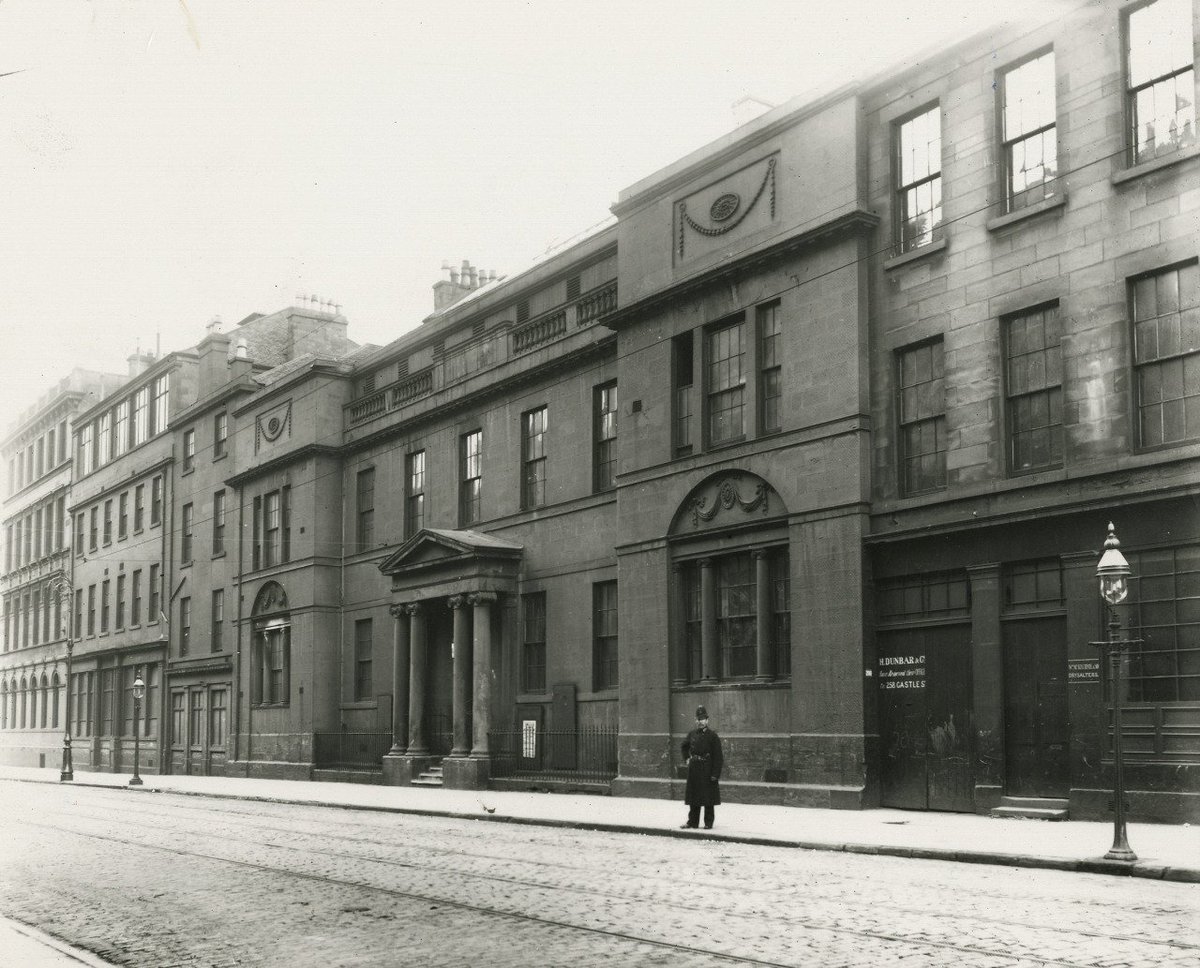
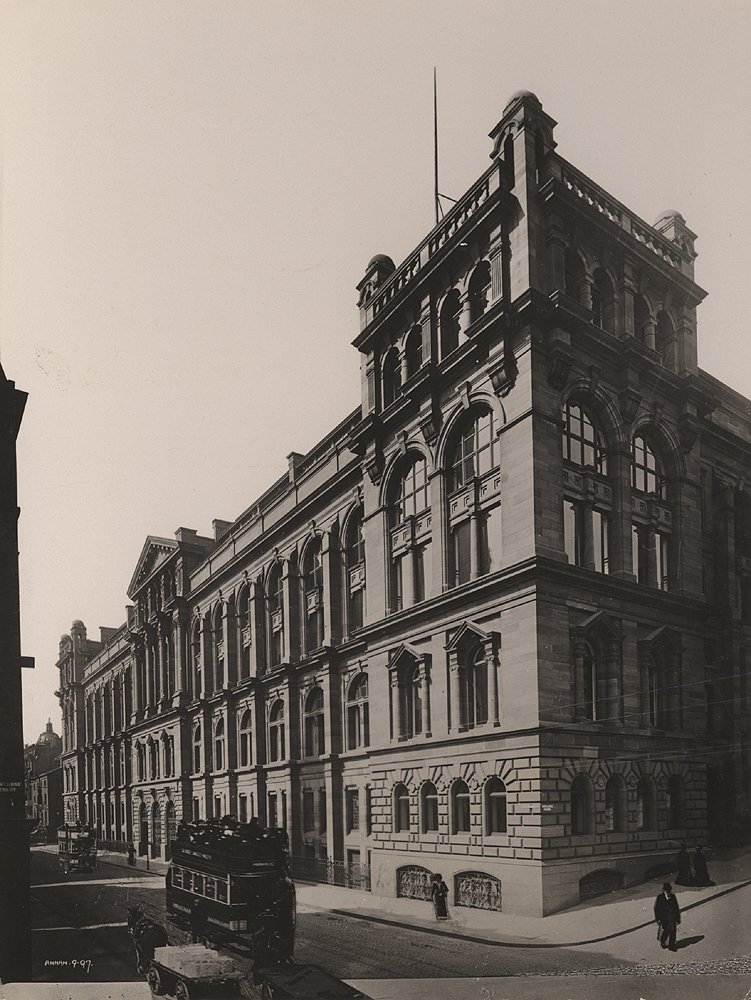
Anderson bequeathed money for the foundation of a new university dedicated to teaching practical & industrial subjects, thus Anderson's University was founded along with its museum. The university had several homes, including a former meat market, before settling in George Street
The Andersonian Museum finally closed in 1904 with demolition of the old building to make way for its grand replacement. After several amalgamations the university became the Royal Technical College and subsequently went on to become the University of Strathclyde.
Although John Anderson's name no longer lives on in his university or museum, he is remembered for having inspired James Watt (who was employed at the University of Glasgow to repair & fabricate scientific instruments) after presenting him with a model Newcomen engine for repair.

Monday, April 9, 2018

Cheltenham Ladies' College: Archives and Insights they Offer

The SoGlos online magazine in Cheltenham, Gloucestershire published a fascinating interview with Rachel Roberts, archivist at Cheltenham Ladies' College.  Roberts discusses her responsibilities for collecting, recording and displaying the archives and the insight they offer into the school’s history.

The college was founded in 1853 and serves as an independent boarding and day school.
The college website includes a number of innovative presentations of historical information.  The 
COLLEGE IN ONE HUNDRED OBJECTS was set up to celebrate our landmark 160th anniversary in 2014.  The projects brought together pupils, Guild members (alumnae) and staff in developing a shared tribute to Cheltenham Ladies' College distinctive values and atmosphere.

You can visit the archives web page and also follow the archives on Twitter @CLCArchives for regular informative tweets.

Wednesday, March 28, 2018

Brief History of Front Square at Trinity College Dublin


Senior staff writer, Holly Brown, notes that the, "...architectural history of the College dates back to 1592 when the first foundation stones were laid on the former site of Old Hallows Monastery."  She concludes that while the space provides a rare setting of tranquility and order in an urban setting, it wasn't by design...it just turned out that it works.


Friday, January 26, 2018

University of Central Lancashire Prepares for Anniversary of Founding

The University of Central Lancashire is preparing to celebrate the 190th anniversary of its founding in 1828.
You can visit the institution's web site for links to information on individuals who played key roles, separate pages devoted to each of seven historical periods, planned anniversary events, and ways to share stories or get involved.  A short YouTube video provides a "Timeline of UCLan's 190th History."

Tuesday, September 12, 2017

History of the University of Westminster: University Press offers four Titles

The University of Westminster Press offers four books as part of their History of University of Westminster Series.  Each book is available free of charge in .pdf format on the press website or copies of the books can also be ordered.

The story of the (now restored) Regent Street Cinema. This multi-authored volume tells its history from architectural, educational, legal and cinematic perspectives and is richly illustrated throughout with images from the University of Westminster archive.

The story of the Polytechnic and of the legacy of Quintin Hogg. A fitting tribute to the life and legacy of Hogg, his holistic approach to education and the institute he created. This book is richly illustrated with images from the University's Archive.

The story of sporting communities and individuals at the University of Westminster over 150 years including its role as a pioneer of women's sports. Drawing upon the University's extensive archives this richly illustrated book celebrates its unique, ground-breaking sports heritage.

The Royal Polytechnic Institution's story is the first episode in the long, diverse history of the University of Westminster. Drawing on an extensive range of primary and secondary sources this book explores the Institution's reputation for visual spectacle and the popularization of science. It is lavishly illustrated with contemporary images.
The University of Westminster was initially founded in 1838 in London at 309 Regent Street and was known as the Polytechnic Institution.  The name changed in 1841 to The Royal Polytechnic Institution under patronage of Prince Albert, husband of Queen Victoria.
The institution became publicly funded in 1891 and the name changed to Regent Street Polytechnic.  The name changed again to Polytechnic of Central London in 1970 following merger with the Holborn College of Law, Languages and Commerce.  University status was achieved in 1992 and the name was changed to the University of Westminster.  The university currently enrolls 22,000 students on four campuses in Cavendish, Harrow, Marylebone and Regent.

Tuesday, July 18, 2017

Solving the Mystery of St. Etheldreda's College

Derek James of the Norwich Evening News posted an article this week, "Solving the mystery of 'St. Etheldreda's College,'" where he reports on efforts to learn more about the institution. St. Etheldreda's, also known as The Norwich Diocesan Training College operated in several locations from 1839 until it was destroyed during the Blitz in 1942.
  
Keswick Hall College of Education filled a need for teacher training in the post-war period from 1948-1981 and web pages devoted to its history include a brief sketch of the Norwich training college with a number of interesting photographs.


Monday, November 23, 2015

Historical Images of the University of Manchester

Emma Curry of the Manchester Evening News has a retrospective look at the history of the University of Manchester.  The article includes a number of photographs from the Manchester Local Image Collection.
The university also maintains an extensive set of pages documenting the institution's history and heritage that trace back to 1824.  The university was formed from the merger of Victoria University of Manchester and the University of Manchester Institute of Technology in 2004. 

Friday, November 20, 2015

College of Estate Management Gains University Status

The College of Estate Management (CEM) gained university status and will be assuming a new name as the University College of Estate Management (UCEM).  UCEM was officially founded in 1919 as the Chartered Auctioneers' and Estate Agent's Institute.  UCEM primarily offers courses through distance learning and is headquarterin Reading in southeast England.

The institution offers many property-related undergraduate and graduate programs and also provides professional development and corporate training courses.  UCEM active research programme contributes to knowledge across the 

Tuesday, April 14, 2015

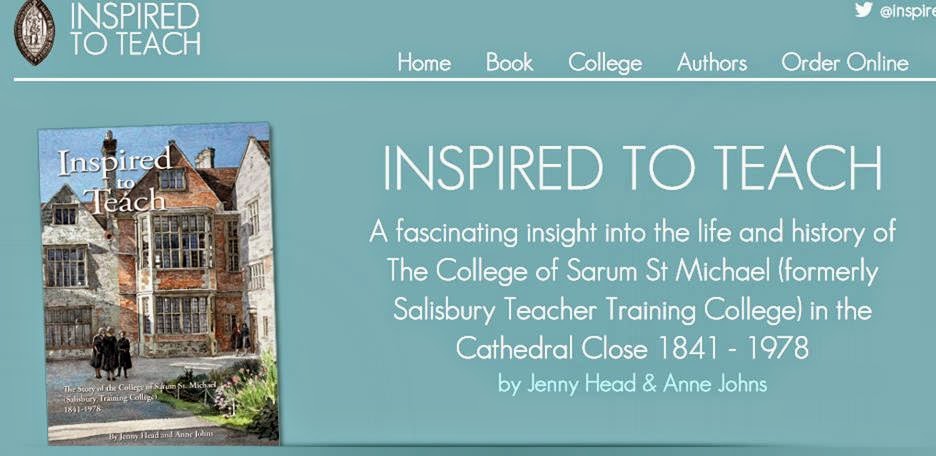
Inspired to Teach, a New History Explores the History of the College of Sarum St. Michael

The Old Students' Association for the College of Sarum St. Michael announces the publication of a history for the former institution that provided teacher training from 1841-1978.  Inspired to Teach is written by Jenny Head and Anne Johns.  Both web sites include also include links to a variety of interesting pages and links for ordering the book.

Wednesday, February 4, 2015

Do institutions need to change their names??

The need to change the name of a higher education institution can sometimes appear obvious and stir up little controversy.  At other times, it can prove to be a very difficult task.

Harriett Line authored a interesting article with suggestions for those considering a name change that appeared in the Times Higher Education on January 29, 2015.

Tuesday, January 20, 2015

King's College London Discontinues Rebranding Campaign

King's College London is no longer planning a name change as part of a larger rebranding effort.  Tom Bawden reports on the decision for The Independent on January 19, 2015.

You can find links to other reporting on the controversial rebranding campaign in an earlier blog post from early January.


Saturday, January 10, 2015

King's College London Will Explore Rebranding Effort Further

While we don't really know if rebranding and renaming ever brings much in the way of tangible results, we can't seem to stop trying.  Often the process unfolds rather quietly, but occasionally the reaction can be swift [even with three years of study and planning]....and, I certainly missed this dust-up in mid-December.
I noticed this morning that King's College London announced it will be holding open meetings this next week on rebranding.

This follows the announcement several weeks ago that it would become King's London in a rebranding effort that led to an outpouring of opposition to the decision and a quick change of plans. The institution stressed that even with a name change, it would continue to use King's College London on legal documents.


Sunday, November 24, 2013

Name Change Approved for Leeds Metropolitan University

Leeds Metropolitan University received approval to become Leeds Beckett University.

A historical outline is available on the institution's web site:
1824 – Leeds Mechanics Institute is founded.
1845 – Leeds College of Commerce is founded.
1846 – Leeds College of Art is founded.
1868 – Leeds Mechanics Institute becomes the Leeds Institute of Science, Art, and Literature.
1874 – Yorkshire Training School of Cookery founded. (Renamed Yorkshire College of Education and Home Economics in 1966).
1907 – The City of Leeds Training College is founded.
1912 – The City of Leeds Training College moves to Beckett Park site.
1933 – The Beckett Park campus is expanded with the creation of the Carnegie Physical Training College.
1968 – The Carnegie Physical Training College merges with the City of Leeds Training College (by then renamed the City of Leeds College of Education).
1970 – Leeds Polytechnic comes into existence, formed from the amalgamation of Leeds College of Technology, Leeds College of Commerce, part of Leeds College of Art, and Yorkshire College of Education and Home Economics.
1976 – Leeds Polytechnic is enlarged with the addition of James Graham College, the City of Leeds College of Education, and the Carnegie Physical Training College.
1989 – Leeds Polytechnic leaves the Leeds Local Education Authority (LEA), and becomes an independent Higher Education Corporation.
1992 – Leeds Polytechnic is re-designated as a university, under the title Leeds Metropolitan University, with power to confer its own degrees and other awards.