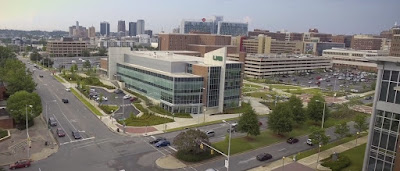
Showing posts with label Alabama. Show all posts

Thursday, May 6, 2021

Judson College Announces Decision to Close


Judson College in Marion, AL posted a press release earlier today, "Judson College board of trustees vote to close 183-year-old institution." The statement cites declining enrollment and an inability to secure adequate resources to support operations. As a result, the College will suspend its academic operation after the summer term ending July 31, 2021.
The Alabama Baptist posted an article by Jennifer Davis Rash with more detailed reporting on the decision, "Judson College board of trustees votes to close school."

If you are interested in recent trends for closures, mergers, and acquisitions access College Closures since 2009 in the index at the right of any College History Garden page. There are separate tabs for non-profit closures, for-profit closures, and one for mergers and acquisitions. Each tab includes basic information for the institutions, i.e., Carnegie Classification, sector, accrediting agency, and the IPEDS unitid.

Tuesday, January 15, 2019

50th Anniversary for the University of Alabama at Birmingham in 2019


The University of Alabama at Birmingham (UAB) is preparing to celebrate the 50th anniversary of its founding in 1969.

UAB's traces its history back along two paths to the 1859 founding of the Medical College of Alabama and the 1936 opening of the Birmingham Extension Center of the University of Alabama. 

In 1945 the Medical College of Alabama was moved from Tuscaloosa and the University's Medical Center was founded in Birmingham. In 1954 the Extension Center was moved to a newly constructed facility adjacent to the Medical Center, bringing together for the first time the University's two academic components in Birmingham. 

Later, in November of 1966, the Extension Center and the Medical Center were administratively merged to form the "University of Alabama in Birmingham," an organizational component of the University of Alabama (in Tuscaloosa). In 1969 UAB became an independent institution, one of the autonomous universities within the newly created three-campus University of Alabama System.

UAB's Archives offer an extensive Chronological History of the institution that includes its predecessors. Archives collections also include university records, manuscripts, and photographs.

Wednesday, December 5, 2018

Education Corporation of America Closes over 75 Campuses

The Education Corporation of America headquarter in Birmingham, AL announced today that it will close more than 75 sites that enroll roughly 20,000 students.  The company began the process of notifying students and employees.  The sites include those operating as Brightwood College, Brightwood Career Institute, Ecotech Institute, Golf Academy of America and Virginia College.

You can read more at Inside Higher Ed in an article that was posted earlier today, "Large For-Profit Chain to Close."  WSFA-TV in Montgomery, AL posted a short video with an article, "Virginia College closing in Montgomery, nationwide."
KCRA-TV in Sacramento, CA posted "Brightwood College closing Modesto, Sacramento campuses" on its website.

Thirty-two sites are listed for Brightwood College in eight states on the IPEDS College Navigator site and twenty-seven sites in eleven states are listed for Virginia Colleges.

Brightwood College Sites Virginia College Sites
Alabama 4
California 10
Florida 3
Georgia 4
Indiana 2
Louisiana 2
Maryland 3
Mississippi 2
Nevada 1
North Carolina 1 1
Ohio 1
Oklahoma 1
South Carolina 5
Tennessee 1 2
Texas 13 2
Virginia 1
Totals 32 27
# states 8 11

If you are interested in recent trends for closures, mergers,and acquisitions access College Closures since 2009 in the index at the right of any College History Garden page. There are separate tabs for non-profit closures, for-profit closures, and one for mergers and acquisitions. Each tab includes basic information for the institutions, i.e., Carnegie Classification, sector, accrediting agency, and the IPEDS unitid.

Tuesday, June 5, 2018

Historical Sketches for Southern Female University and Florence University for Women

The Florence-Lauderdale Public Library Digital Archive posted a couple of historical sketches on Facebook for Southern Female University and Florence University for Women.


Text from the posts follows for those without access to Facebook:
Florence’s Southern Female University.
In its Friday, July 11, 1890 issue, the newly-founded *Florence Times* stated: “Florence already has buildings of which she may feel justly proud, but when the Baptist University is completed it will be the most magnificent structure in the city.” The *Times* was referring to the Southern Female University, under the auspices of the Baptist Church, which was then under construction near the water tower on Seymour Avenue, which in 1890 was a mile or two outside town.
The Southern Female University was created in 1889 by the Alabama Baptists led by Rev. Dr. JB Hawthorne and the Hon. William B. Wood and the Florence Educational, Land and Development Co. The building was designed by the architectural firm of Rousseau & Brechin, which, among other buildings in Florence also designed the Patton School and Florence’s City Hall building, both also constructed in 1890.
The SFU campus comprised 8 acres. The building, which cost $80,000, was 210 feet long, 121 feet wide, five stories high, and contained accommodations for 400 boarders. The building contained 125 rooms, including 38 class rooms, 16 recitation rooms, 50 bedrooms for students, a gymnasium, and a two-story chapel that could seat 750 people. These rooms were heated by steam, lit by electricity, and contained the latest sanitary improvements available in 1890. Among all their other comforts, all the rooms and hallways were carpeted. The brick walls were trimmed in sandstone and the building boasted a mansard (or French) roof with occasional gables. The *Florence Herald* reported that the SFU building was “the largest and best appointed building of its kind in the State.” Towering over the university building, just to the rear stood the Florence Water-Works tower, some 120 feet tall, which still stands to this day.
Rev. LD Bass, DD, was the president of the school. According to the *Florence Times* Mrs. Kate Donegan was the matron (the woman in charge of the girls boarding at the school, what we would call a dorm mother), and one of the students worked off her tuition by serving as housekeeper—one of the first things her fellow-students did was to take up a collection to buy her a nice uniform. According to the *Florence Herald* the uniforms of the students were black, and the *Herald* stated that the girls looked “neat and pretty” in them.
School opened in the university chapel at at 9:30 am on September 15, 1891, with some sixty-three students in attendance. The young ladies came from just about every Southern state in the US and according to the *Herald* from as far north as New York and as far south as Nicaragua. According to the *Florence Times* sixty-three girls were present for that opening assembly, and seventy-five girls were registered boarders at the school, with more expected soon. Many of the girls were students of other universities taking postgraduate courses at SFU.
The school had nineteen faculty members and offered five academic courses of study, three of which led to degrees and two to certificates, one course offered being a business course. According to advertisements for the school, boarding, lights, fuel, servants attendance, etc., for five months was $64.50 and tuition was $25.
As it was a Christian university, the girls attended chapel on Sundays and though it was officially a Baptist school, the university was non-denominational in outlook, hence the first sermon preached was by Rev. TR McCarty of the Methodist Church.
Despite a successful first year, SFU started off its second year with serious problems, which included its location nearly a mile outside the city limits, with no sidewalks, streetcar, or paved roads. Nevertheless, Florence residents were shocked to discover on October 14, 1892 that Dr. Bass had been in negotiations with the Elyton Land Co. of Birmingham to relocate the school to Birmingham. Indeed, the very next day, Saturday, October 15, 1892, the students left Florence for Birmingham at 10 am on the Birmingham, Sheffield and Tennessee River Railroad. Their destination was the large Lakeview Hotel near Birmingham. Dr. Bass had secured this building and the surrounding seven-acre park for five years rent free. The hotel was fully furnished and carpeted. According to the *Florence Times* they were to be met in Birmingham by a brass band, a procession of school children, and city officials welcoming them to Lakeview.
Thus the Southern Female University of Florence relocated from Florence to Birmingham. The building in Florence sat empty for 16 years—until 1908. In the spring of that year the building was reopened as the Florence University for Women. In the next article we’ll look at the history of that university.
Photos:
L, The Southern Female University building from the 1910-1911 catalog of the Florence University for Women, which succeeded the SFU in 1908. R, A newspaper “card” or advertisement, for the Southern Female University from the *Florence Herald* of Wednesday, September 16, 1891, p. 1.

The Florence University for Women, Successor to the Southern Female University, 1908-1911.
In our last article we looked at the Southern Female University, founded in 1890 on Seymour Avenue in Florence, next to the water-tower, which was and is the highest elevation in Florence. As we noted though, the school, run under the auspices of the Baptist Church, only operated for two years, opening in September of 1891 and closing suddenly in October of 1892 when it relocated to Birmingham. The building sat empty and idle for sixteen years, until April of 1908.
In its Wednesday, April 20, 1908 issue, the *Florence Herald* stated that “Mr. M. W. Hatton, President of the Southern Female College of LaGrange, Ga., has bought from the Florence Land Company the building known as the Baptist University and will open a college for girls and young women September 1st next.”
Prof. M. Wesley Hatton had been President of the Southern Female College of LaGrange, since 1902, and intended to operate that school and the new school in Florence along similar lines. The Professor had an extensive background in education, having graduated from Missouri State University and Harvard University, and having held teaching positions at McGee College (professor of English and Anglo-Saxon), Grand River College (professor of German), and President of Virginia Institute, not to mention Superintendent of Instruction in Missouri. Prof. Hatton made two trips to Florence, the second in April, accompanied by his wife, and was pleased by what he saw.
The one condition was that Florence raise $2,500. This was done, largely through the efforts of Mr. Nial C. Elting and the Florence Commercial Club, assisted by generous donations from the public, with the result that the required sum was raised in only three days. On May 13, the *Herald* reported the school’s opening in September of that year as certain, and stated that Prof. Hatton was already having catalogues for the school printed.
By July, Prof. Hatton and his assistant, OW Anderton were back in Florence. The *Florence Times* reported that several contracts for renovating the building had been awarded. Recall from the last article that the building was 210 feet long, 121 feet wide, and was five stories high (counting the basement). It contained 125 rooms, including 38 class rooms, 16 recitation rooms, 50 bedrooms for students, and a two-story chapel that could seat 750 people. These rooms were heated by steam, and lit by electricity, and contained the latest sanitary improvements available in 1890. All the rooms and hallways were carpeted. The brick walls were trimmed in sandstone and the building boasted a mansard (French) style roof with occasional gables. The original cost of the building was $80,000 and the campus encompassed eight acres of land. The *Times* reported that the contract for the furnace was awarded to the Moncrief Furnace Co. of Atlanta, Ga.; the contract for the slate roof was given to George F. Baggott of Florence, while Donald White of Florence had the contract for the plumbing.
According to the school’s 1910-1911 catalogue, in addition to its normal academic courses, which consisted of science, literature, language, Bible, philosophy, art, elocution, normal (teacher training), business, and domestic (what we’d call home-economics), the Florence University for Women also boasted a music conservatory that was said to be second to none. At the end of the 1909-1910 school year President Hatton awarded a $550 piano to the best graduate in music, whether vocal or instrumental. There were 16 faculty and staff members including Prof. and Mrs. Hatton (he taught higher English and Anglo-Saxon and she taught mathematics and astronomy).
The trustees in 1911 were John T. Ashcraft; MW Camper; MW Hatton; R L Glenn; HC Gilbert; CM Southall; former Florence Mayor AE Walker; OW Anderson; and Frank Jackson, with Ashcraft, Camper, Hatton, Anderson and Glenn comprising the executive committee.
Tuition each year was $190 for a full year, or $97.50 for a half-year. Girls whose fathers were pastors received free tuition in the Literary Department.
The school yearbook was called *The Varsity* and it described the various clubs and associations the girls could belong to, which included the Young Womens’ Christian Association (YWCA), the Tennis Club, the Kodak (photography) Club, the Georgia Club and the Fudge Club. The University had both a tennis and basketball club. There were a couple of literary societies and the school had an excellent library. On Mondays and holidays the girls were allowed to go horseback riding, accompanied by their instructor. On Sundays the students attended church, accompanied by faculty. Annually the students took a three-day trip to Mammoth Cave via the L&N Railroad, which cost each girl $14. Also each year the Sheffield Electric and Railway Company provided a trolley car ride and outing to the students. Every year a two-day trip to Shiloh Battlefield was also taken. JW Hall ran a horse-drawn bus line to the school with the first bus leaving Florence at 8 a.m. and others meeting the incoming cars (presumably the streetcars which began operation in 1904). The fare each way was five cents.
Uniforms were worn by the girls to church on Sundays, on the street, and on public occasions. For every day the girls were allowed to dress as they pleased, as long as it was neat. The winter uniforms were a black coat and suit and black Oxford cap, while the spring uniforms were a white linen suit and coat with Oxford cap.
On Wednesday, September 9, 1908, the Florence University for Women opened its doors for the first time, for a student orientation and reception with approximately fifty students present. The *Times* reported that more students were expected each day for several weeks.
Unfortunately, disaster struck the university at 3 a.m., Thursday, March 2, 1911, when a fire broke out at the University. This was ironic because the Southern Female College in LaGrange, Georgia, the sister school to the Female University in Florence, burned to the ground in July of 1908.
Prof. Hatton was awakened around 3 a. m. by the sounds of screaming girls, and, rushing outside of his room, he saw that the eastern part of the building was on fire. While Mrs. Hatton called the Florence Fire Dept. Prof. Hatton heroically attempted to put out the fire, with the school’s fire-hose, but it was no use. The building quickly burned to the ground. Fortunately, no one was injured, save a sprained ankle suffered by Prof. Hatton. Though the students and faculty lost only what was in their rooms, Prof. CW Best lost all of his worldly possessions, which were in his room. The girls were housed with neighbors of the university while plans were made for them to be boarded, and for school to continue, at the Jefferson Hotel in Florence however on March 9 the *Florence Herald* reported that the school would not reopen.
The total loss on the building was $100,000. The university was insured for $16,000--$12,000 on the building and $4,000 on furnishings. The *Florence Times* speculated that as there was no fire burning in the furnace, faulty wiring was the cause of the fire.
Friday, May 5, the *Florence Times* reported that Prof. CW Best, director of music at the former Florence University for Women, along with Mrs. Best, Miss Gabriella Knight and Miss Helen Katz had just founded the Florence Conservatory of Music. How long this institution was in operation isn’t known.

Saturday, June 2, 2018

Early Colleges Featured on Alabama Pioneers Website

The Alabama Pioneers website offers a number of posts on higher education institutions that include historical sketches written by Donna R. Causey.  Each post includes photographs and notes on sources for the information.

Saturday, February 24, 2018

Concordia College Alabama will Close

The Selma Times-Journal published this week that, "Concordia College Alabama to close at the end of spring semester."  Reporter Blake Deshazo visited with Dr. James Lyons, chief transition officer and interim president for the college, who had shared the news with faculty, staff, and students on Wednesday.  Concordia is a historically black Lutheran College with approximately 400 students.

Deshazo of The Times-Journal previously reported the institution was facing financial pressure on February 6, 2018 that "Concordia College in need of investors to remain open."

The institution was founded as Alabama Lutheran Academy & College in 1922.  Alabama Luther College graduated its first class of four women in 1926, but discontinued the college program for a time during the Depression and it was renamed Alabama Lutheran Academy.  College coursework was added back and the name changed to Alabama Lutheran Academy and College.   Then in 1981, the name was changed to Concordia College.

Concordia received accreditation as an associate-degree granting institution by the Southern Association of Colleges and Schools (SACS) in 1983. In 1994, SACS granted Concordia accreditation as a bachelor’s degree granting institution. Concordia continued to grow and in 2010 it acquired the property of the United Methodist Children’s Home, expanded the size of the campus from 22 acres to 57, as well as adding additional housing and historic buildings.

If you are interested in recent trends for closures, mergers,and acquisitions access College Closures since 2009 in the index at the right of any College History Garden page.  There are separate tabs for non-profit closures, for-profit closures, and one for mergers and acquisitions.  Each tab includes basic information for the institutions, i.e., Carnegie Classification, sector, accrediting agency, and the IPEDS unitid.

Wednesday, September 13, 2017

Spring Hill College Videos Present Institutional History

Spring Hill College, a Jesuit institution in Mobile, AL was founded in 1830 and currently enrolls almost 1,500 students.  There are a couple of interesting videos available that present the institution's rich history.  "The History of Spring Hill College" is 10 minutes in length and "Spring Hill College: A Retrospective" is just over 24 minutes.


You can also visit the institution's web site for a brief historical sketch and the college Archives & Special Collections maintains web pages with a detailed historical outline and links to other resources or collections.

Monday, June 5, 2017

Southeastern Bible College Suspends Operations

The trustees of Southeastern Bible College (SBC) in Birmingham, AL announced on June 1, 2017 that the institution will be suspending operations.  The statement posted on the SBC website indicates that a planning process will start to try and reopen at some future point in time.

SBC was founded in 1935 as Birmingham School of the Bible.  The name changed to Southeastern Bible School in 1943 and to Southeastern Bible College in 1950.

If you are interested in recent trends for closures, access College Closures since 2009 in the index at the right of any College History Garden page.  There are separate tabs for non-profit and for-profit closures.  Each tab includes basic information for each institution, i.e., Carnegie Classification, sector, accrediting agency, and the IPEDS unitid.

Sunday, January 25, 2015

Catholic Higher Education in the American South, 1830-1930

Kathryn Mary Wrightson's 2003 Ph.D. dissertation for the University of Georgia, Toward a History of Catholic Higher Education in the American South:  Essays on Sources and Context, is available for those interested in the history of southern colleges.  The author identified fifty-five Catholic institutions that opened during the period between 1830-1930.  Ten of these are still operating and the others tended to close after brief periods due to the isolation and poverty of the areas served.

Wrightson begins with an overview of 19th century religious life in the region.  The third chapter provides brief historical sketches of the Catholic colleges founded in nine states.  The fourth and fifth chapters focus respectively on the structures and "souls" of Catholic colleges.  She concludes by analyzing institutional success and closure in a variety of ways.  Wrightson also includes comments on the state of available sources for information and offers useful suggestions for additional research.

Tuesday, November 25, 2014

Alabama Colleges that have Closed, Merged, or Changed Names

This table below includes institutions that have closed, merged, or changed their names.  If you note a need for changing or updating information, please notify ray01brown@gmail.com or leave a comment below.

An index with links to separate pages for other states and countries is available.

There is a College History Garden Facebook group or you can view and follow multiple College History Garden boards on Pinterest or there is a board specifically devoted to Alabama colleges.

Thanks for your interest and suggestions!

Monday, September 15, 2014

Liberal Arts Colleges in the South: Case Study Analysis of Recent Strategic Decisions

The September 2014 issue of Business Officer includes an interesting article by Michael Horan, "The Upside of Strategic Discipline."  The article focuses on issues faced by Sewanee: The University of the South and Oglethorpe University during the past decade.  The September issue is not currently visible on the NACUBO web site so you will need to find a campus business officer or other administrator who has a subscription.

Horan uses a case study approach and identifies a number of key lessons.  I particularly appreciate his conclusion that the "...lack of an 'endless good argument' between all of the stakeholders can spell disaster..."

The article refers to Horan's more extensive research in his 2013 dissertation from the University of Georgia where he focused on Sewanee and two other institutions, Birmingham-Southern and Greensboro College.


Wednesday, April 30, 2014

Sacrifice and Survival: Identity, Mission, and Jesuit Higher Education in the American South


Eric Platt's book is available through Amazon and will be a good addition to your reading list if you want to know about Jesuit colleges of the New Orleans Province.  Institutions included for Platt's study include: the College of the Immaculate Conception, New Orleans, Louisiana; Spring Hill College, Mobile, Alabama; St. Charles College, Grand Coteau, Louisiana; St. Mary’s College, Galveston, Texas; College of the Sacred Heart, Augusta, Georgia; Loyola College, New Orleans, Louisiana; and Loyola University New Orleans.

Monday, July 11, 2011

Identity and Mission in Jesuit Higher Education


R. Eric Platt’s Ph.D. dissertation, Sacrifice and Survival: The Historiographic Role of Identity and Mission in Jesuit Higher Education of the New Orleans Province, submitted to the Graduate Faculty of the Louisiana State University and Agricultural and Mechanical College, August 2011, is available through the LSU Electronic Thesis & Dissertation Collection.

The fascinating work uses historiographically-constructed case studies to address whether institutional identity and mission of colleges and universities affect their ability to survive. Platt further explores whether social environments contributed to the survival of particular institutions of higher education and how the relationship between a college or university and the surrounding social environment contributed to its ability to persist.

Anyone interested in Jesuit colleges of the New Orleans Province will enjoy reading the dissertation. Institutions included for study include: the College of the Immaculate Conception, New Orleans, Louisiana; Spring Hill College, Mobile, Alabama; St. Charles College, Grand Coteau, Louisiana; St. Mary’s College, Galveston, Texas; College of the Sacred Heart, Augusta, Georgia; Loyola College, New Orleans, Louisiana; and Loyola University New Orleans.

Monday, June 23, 2008

Alabama Records of Defunct Colleges


The Alabama Community College System offers contact information and transcripts for some institutions that have closed.
Records are available for:
Alabama Career College / Huntsville Business Institute
Alverson-Draughon-Huntsville
American College-Prichard
Birmingham School of Allied Health
Career Training Institute-Huntsville
CDL Truck Driving Training-Albertville
Coastal Training Institute
Faith Grant College
Gadsden Business College